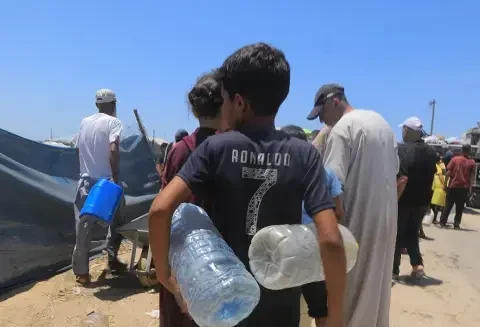
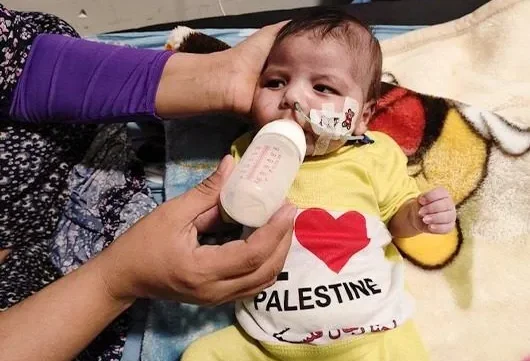
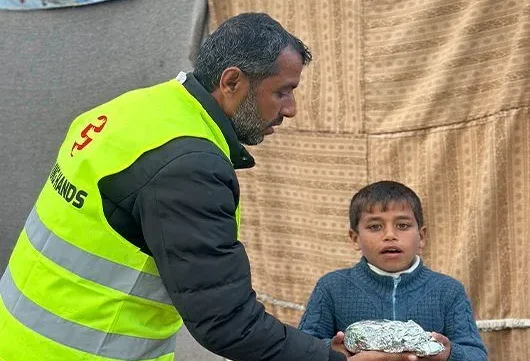


Zakat for Palestine means directing your annual obligatory Zakat to Palestinian families who meet the Islamic criteria for receiving it. Palestinian recipients qualify under the Quranic category of *al-masakin* (the poor) and *al-gharimun* (the debt-burdened). According to OCHA, over 2.1 million Palestinians in Gaza face acute food insecurity. Every adult Muslim who holds savings above the nisab threshold must pay Zakat. Few causes in the modern world meet the eligibility criteria as clearly as this one.
Why Zakat for Palestine Matters Today
Palestinian families face one of the worst humanitarian crises on record. The UN reports that Gaza’s destruction has left the vast majority of its population without stable shelter, clean water, or food security. This isn’t charity in the optional sense. For Muslims with wealth above the nisab, sending Zakat to Palestinian families is an obligation, not a preference. The Quran names eight categories of Zakat recipients in Surah At-Tawbah (9:60), and displaced, impoverished Palestinians fall into at least three of them. Giving Hands supports Palestinian communities through its ongoing Palestine relief work. Understanding the fiqh behind this giving helps donors act with both urgency and confidence.
Key Facts About Zakat for Palestine
The nisab in 2026 sits at roughly $5,200 USD (based on 85 grams of gold). Anyone holding that much in savings for one lunar year owes 2.5% of their total zakatable wealth. For a Muslim with $20,000 USD in savings, that’s $500 USD owed. Palestinian families living in displacement camps or besieged areas meet the classical definition of *al-masakin*. Scholars including Sheikh Yusuf al-Qaradawi and contemporary fiqh councils have confirmed that Zakat can cross borders when local needs don’t exhaust the obligation. UNICEF estimates that Palestinian children face some of the highest acute malnutrition rates documented outside a declared famine zone.
Who Qualifies to Receive Zakat from Palestine?
Palestinian families in besieged and displaced areas meet the classical Zakat conditions on multiple grounds. Scholars classify recipients by need, not nationality. A Palestinian family who lost their home, their income, and their access to food fits the categories of *al-masakin* (the destitute) and *al-fuqara* (the poor) without question. Many also qualify as *ibn al-sabil*, the stranded traveler with no means of return. According to UNICEF, over one million Palestinian children face acute food insecurity. The need is not theoretical. It is documented, ongoing, and severe.

Do Palestinians Need to Be Local to Receive Zakat?
Classical scholars agreed that Zakat can travel to where the need is greatest. Imam al-Nawawi wrote in *al-Majmu* that transferring Zakat to a distant region is permitted when local recipients don’t exhaust the funds. Palestinian families have no functioning local Zakat infrastructure. The entire civil system has collapsed under blockade and conflict. So the obligation falls outward, to the broader ummah. Scholars like Sheikh Ibn Baz affirmed this principle clearly. Distance doesn’t reduce the duty. It shifts it.
What About Palestinians in Refugee Camps?
Gazarian families and Palestinian refugees living in camps in Lebanon, Jordan, and Egypt also qualify for Zakat. Displacement doesn’t remove eligibility. It often deepens it. Refugees who lost their land and livelihoods meet the *al-masakin* threshold without needing further proof. The Prophet Muhammad (peace be upon him) said: “The best charity is that given to a relative who is also an enemy.” (Sahih al-Bukhari) Helping those in hardship, wherever they are, reflects the spirit behind that teaching.
Common Misconceptions About Zakat for Palestine
Many donors hesitate because they’ve heard conflicting opinions. Some worry their Zakat won’t reach the right people. Others question whether organizations working in Gaza are trustworthy. These are fair concerns. But hesitation has a cost too. UNICEF data shows that malnutrition among Palestinian children worsened each year the conflict continued. The communities bearing that cost can’t afford to wait while donors debate. Understanding what’s actually true, versus what’s rumor, helps donors act with both speed and clarity.
“Zakat Can’t Be Sent Abroad”
This is a minority opinion, and most contemporary scholars reject it. The Hanafi school permits sending Zakat abroad when local need is satisfied. The Shafi’i and Hanbali schools also permit it under conditions of greater need elsewhere. The Palestinian situation creates exactly that condition. There is no local Zakat system functioning at scale. Recipient communities are cut off from normal support channels. Scholars across all four major madhabs have issued guidance permitting, and in some cases recommending, Zakat transfers to Palestinian families.
“Only Cash Reaches People There”
Aid organizations working in Palestine use multiple channels. Cash transfers, food parcels, medical supplies, and shelter kits all reach families through established networks. The real variable is the trustworthiness of the organization, not the form of the gift. Donors should look for organizations registered with a national charity regulator. In Canada, that means CRA-registered charities that issue official tax receipts. A CRA registration signals financial accountability. It also means your Zakat contribution qualifies for a Canadian charitable tax receipt.
How Displacement Changes the Zakat Calculation
Displacement doesn’t change how a donor calculates Zakat. It changes who they should prioritize sending it to. A Muslim with savings above the nisab still owes 2.5% of their total zakatable wealth. But when Palestinian families face documented, extreme need, their claim on that 2.5% carries weight that general local distribution doesn’t. The ummah’s collective Zakat pool is vast. Palestinian families represent one of the most acute, verified, and sustained cases of need in the world today. Quiet, consistent attention to their situation, year after year, is what actually moves things forward.
What Palestinian Need Means for Your Zakat This Year
Palestinian families face one of the most documented humanitarian crises in the world. UNICEF reports that children in Gaza face acute malnutrition, destroyed medical infrastructure, and mass displacement. These conditions meet every classical scholarly criterion for Zakat eligibility. The Quran names the poor, the needy, and those in debt as primary recipients. Palestinian families often qualify across more than one category at once. For Canadian Muslim donors calculating their 2.5%, the scale and severity of Palestinian need places it at the front of any serious Zakat plan.
Does Zakat Reach Palestinian Families Effectively?
Aid does reach Palestinian families, though access fluctuates with border conditions. Organizations working through established networks, including UN-coordinated channels, continue distributing food, medical supplies, and cash assistance. CRA-registered Canadian charities add a layer of financial accountability to that chain. Donors who verify CRA registration can trust that their Zakat moves through a regulated structure, even when field conditions are difficult.
How Canadian Donors Can Stay Informed
Staying informed is itself an act of care. OCHA publishes regular situation reports on humanitarian access in Gaza. The UN Office for the Coordination of Humanitarian Affairs tracks funding gaps and unmet needs across all sectors. Canadian donors who follow these updates make sharper Zakat decisions. They can match their giving to the areas of deepest, most current need, rather than relying on news cycles that move on quickly.
The quiet work of caring for Palestinian families does not begin or end with headlines. It lives in the consistent choices of donors who return, year after year, to the same commitment. At Giving Hands, that consistency is built into how we approach every program we run. The ummah’s strength has always been its long memory and its refusal to look away. See how this work continues.