

Ramadan is a time for deep prayer and fasting. However, many people cannot fast due to health or age. If you are in this group, you might feel like you are missing out. Thankfully, Islam provides a beautiful way to stay connected. This path is called Fidya. You pay this compensation if you cannot fast for valid, long-term reasons. It is a mercy from Allah that turns your struggle into a meal for someone in need. At Giving Hands, we help you fulfill this duty with ease. Our team ensures your Fidya reaches the most vulnerable families across the globe. This guide explains everything you need to know for 2026. We cover the rules, the costs, and how your gift changes lives.
What Exactly is Fidya?
Fidya is a religious donation. It is meant for Muslims who cannot fast during Ramadan. This usually applies to those with permanent health issues. Instead of fasting, you provide food for a person in need.
The word itself means “ransom.” You are essentially providing a substitute for your physical fast. This rule comes directly from the Quran. It shows that Islam values your health. Allah does not want to make your life hard. If fasting hurts your body, you have another way to earn rewards.
Who Should Pay Fidya?
Not everyone who misses a fast pays this amount. It is specifically for those who cannot make up the days later. Here are the three main groups:
- Senior Citizens: Many older adults are too frail to fast. If fasting causes physical pain or weakness, they should pay the compensation instead.
- The Chronically Ill: People with long-term conditions like diabetes or kidney issues often need regular food and meds. If a doctor says fasting is unsafe, you fall into this category.
- Permanent Health Issues: Some people have conditions that will not go away. If you cannot fast now and don’t expect to recover, you pay the daily rate.
If you are just sick for a few days with a cold, you do not pay this. You simply fast those days later when you feel better.
The Vital Difference: Fidya vs. Kaffarah
Many people get these two words mixed up. However, they are very different.
Fidya is for those with a valid excuse. It is a path of mercy. You are not in trouble for missing the fast. You are simply following a different rule.
Kaffarah is a penalty. It is for someone who breaks a fast on purpose without a good reason. The cost of Kaffarah is much higher. You must either fast for 60 days straight or feed 60 poor people for every single day you missed.
Always check your situation. If you have a medical reason, you are looking for the Fidya option.
How Much Does Fidya Cost in 2026?
The amount of money changes based on food prices. Traditionally, you must provide two meals for one person for every fast you miss.
For the 2026 season, the estimated rate is $10 to $15 CAD per day.
If you miss the whole month of Ramadan, you would pay for 30 days. At $10 a day, that is a total of $300. This money goes toward basic food items. Think of staples like rice, flour, oil, and lentils. These items can sustain a family for a long time.
Rules for Pregnant and Breastfeeding Mothers
This is a common question for many women. Most scholars agree that if a mother fears for her health or her baby, she can stop fasting.
In most cases, she should make up these fasts later. This is called “Qada.” However, some women have children back-to-back. They might be pregnant or nursing for several years in a row. In these rare cases, making up 60 or 90 days of fasting is too hard.
If you find yourself in this spot, talk to a local Imam. Many scholars allow mothers in this situation to pay the compensation instead. This removes the heavy burden from the mother while still honoring the month.
Why Your Intention Matters
In Islam, your intention (Niyyah) is everything. When you pay your money, you must have the right heart. You are not just paying a bill. You are performing an act of worship.
Before you click “donate,” take a moment. Tell yourself that this money is to fulfill your Ramadan duty. This simple thought turns a bank transfer into a spiritual milestone. It connects your soul to the act of giving.
The Spiritual Benefits of Giving
Paying your compensation is not a “loss.” It is a massive gain. You are helping a hungry person survive. In the eyes of Allah, feeding a person is one of the best deeds you can do.
When you cannot fast, you might feel a gap in your soul. Giving to others fills that gap. You still get to feel the spirit of the month. You are still part of the global Muslim community. Your wealth becomes a tool for good.
How Giving Hands Uses Your Donation
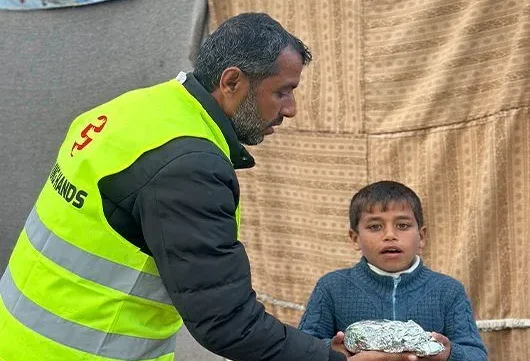
At Giving Hands, we take our job seriously. We know this is your religious duty. We don’t just hand out cash. We turn your money into real food.
Our teams go to the poorest areas. We find families who don’t know where their next meal is coming from. We buy food in bulk to save money. This means your $10 goes further. We provide:
- Large Food Packs: Bags filled with flour, sugar, and beans.
- Iftar Meals: Hot, cooked food for people to break their fast.
- Clean Water: Sometimes we use funds to ensure families have water to drink with their meals.
Can You Pay for Past Years?
Yes, you can. Life happens. Sometimes we forget, or we didn’t know the rules. If you have missed fasts from three years ago and never made them up, you can pay now.
Calculate the total number of days you owe. Use the current 2026 rate. Paying these backlogs brings a huge sense of relief. It clears your record and helps someone eat today. Don’t let the past weigh you down. Clear your debt and feel the peace.
How to Calculate Your Total Payment
Follow these easy steps to find your total:
- Count your days: Did you miss the whole month? That is 30 days. Did you miss half? That is 15.
- Check the rate: Use the $10 per day standard.
- Multiply: 30 days x $10 = $300.
- Donate: Go to the Giving Hands website and select the “Fidya” option.
It only takes two minutes, but the impact lasts a lifetime.
Common Myths About Missing Fasts
There is a lot of wrong information online. Let’s clear it up:
- Myth: “I’m too busy at work, so I’ll just pay the money.”
- Truth: No. Work is not a valid reason to miss a fast. You must be physically unable to fast.
- Myth: “Fidya is only for poor people to pay.”
- Truth: No. If you have the money and cannot fast, you must pay for it. It is for everyone who can afford it.
- Myth: “I have to pay it on the very last day of Ramadan.”
- Truth: You can pay it any time during the month. In fact, paying early helps charities buy food in time for the hungry.

The Impact of a Single Meal
You might think $10 is small. In Canada, it barely buys a burger. But in many parts of the world, $10 is a fortune. It can buy enough rice to feed a child for a week.
When you give through Giving Hands, you see the power of your dollar. You are providing protein for a growing child. You are giving strength to an elderly person. Your “compensation” becomes their “celebration.”
Why Transparency is Key
You want to know where your money goes. We agree. Giving Hands provides updates on our projects. We show you the trucks being loaded. We show you the families receiving the packs.
Trust is the foundation of our work. When you trust us with your worship, we work hard to honor that. We follow strict rules to ensure only the needy receive these specific funds.
Final Thought: A Religion of Ease
Islam is a religion of ease and mercy. If you cannot fast, do not be sad. Allah has given you a different way to shine. Your Fidya is a bridge between your heart and the hungry.
By paying your dues, you are keeping the spirit of Ramadan alive. You are proving that charity has no limits. Even if you cannot join the fast, you are still a hero to a family in need.
Are you ready to fulfill your duty? Visit Giving Hands today and make your payment. Let’s make sure no one goes hungry this Ramadan.